The Business Messaging Landscape in the UK: The Renaissance of the Native Inbox
The United Kingdom has established itself as one of the most mature, high-value, and compliance-driven digital economies in the world. As UK enterprises look to maximize customer lifetime value amid shifting economic conditions, the business messaging ecosystem is undergoing a dramatic paradigm shift. While in other countries the landscape is defined by near-total reliance on a single third-party application, the UK market is characterised by a fierce battle between over-the-top (OTT) ecosystems and the carrier-backed native inbox revival.

The Native Inbox Renaissance: The Explosive Rise of RCS
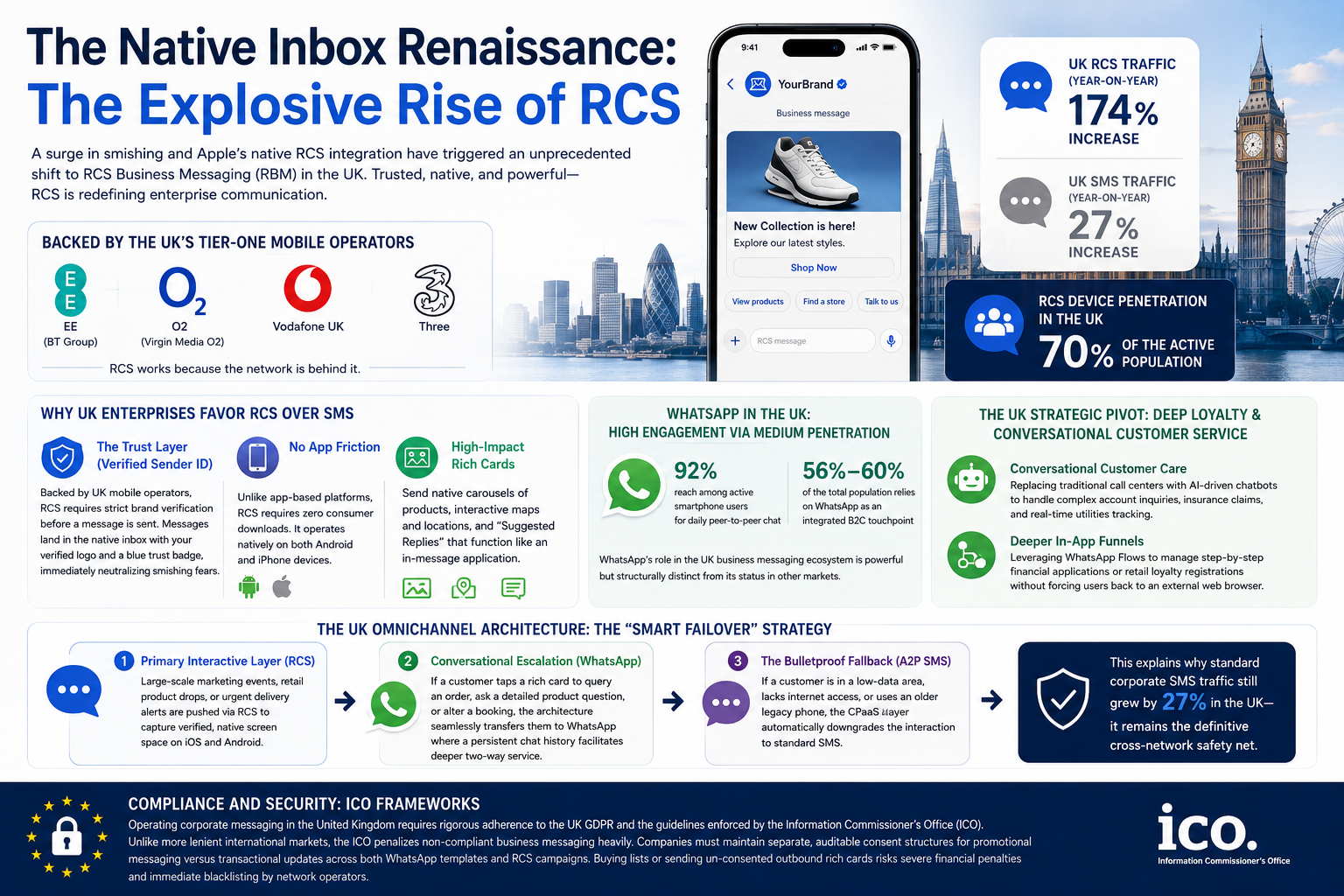
For over a decade, UK enterprise marketing relied heavily on traditional A2P (Application-to-Person) Bulk SMS. However, the landscape completely fractured due to an exponential surge in "smishing" (SMS phishing) attacks and fraudulent package-delivery texts. This crisis of consumer trust, combined with Apple's native integration of RCS (Rich Communication Services) across iOS, has triggered an unprecedented migration to RCS Business Messaging (RBM).
Data from major cloud communication studies reveals that RCS traffic in the UK has skyrocketed by 174% year-on-year, with overall RCS device penetration reaching 70% of the active population.
UK Mobile Messaging Traffic Growth (Year-on-Year)
RCS Traffic: 174% Increase
SMS Traffic: 27% Increase
Why UK Enterprises Favor RCS Over SMS:
- The Trust Layer (Verified Sender ID): Backed by the UK's tier-one mobile network operators—including EE (BT Group), O2 (Virgin Media O2), Vodafone UK, and Three—RCS requires strict brand verification before a message can be deployed. Messages land in the native inbox bearing the company's verified logo and a blue trust badge, immediately neutralizing smishing fears.
- No App Friction: Unlike app-based platforms, RCS requires zero consumer downloads. It operates natively on both Android and iPhone devices.
- High-Impact Rich Cards: Brands can send native carousels of products, interactive map locations for click-and-collect orders, and structured "Suggested Replies" that function like an in-message application.
WhatsApp in the UK: High Engagement via Medium Penetration
WhatsApp's role in the UK business messaging ecosystem is powerful but structurally distinct from its status in other markets. While it boasts a staggering 92% reach among active smartphone users for daily peer-to-peer chat, it is categorized as a medium-penetration market for strict transactional utility, with roughly 56% to 60% of the total population relying on it as an integrated B2C touchpoint.
The UK Strategic Pivot: Deep Loyalty & Conversational Customer Service
Because 31% of UK consumers explicitly state they interact with brands daily via social messaging, UK enterprises do not use the WhatsApp Business Platform for broad, top-of-funnel marketing blasts. Instead, they deploy it for high-value, high-intent interactions:
- Conversational Customer Care: Replacing traditional call centers with AI-driven chatbots to handle complex account inquiries, insurance claims, and real-time utilities tracking.
- Deeper In-App Funnels: Leveraging WhatsApp Flows to manage step-by-step financial applications or retail loyalty registrations without forcing users back to an external web browser.
The UK Omnichannel Architecture: The "Smart Failover" Strategy
Because the UK market remains split between app-based communication and carrier-native texting, sophisticated UK brands (especially in banking, retail, and logistics) avoid single-channel strategies. They orchestrate their communications using a multi-layered routing model:
- Primary Interactive Layer (RCS): Large-scale marketing events, retail product drops, or urgent delivery alerts are pushed via RCS to capture verified, native screen space on iOS and Android.
- Conversational Escalation (WhatsApp): If a customer taps a rich card to query an order, ask a detailed product question, or alter a booking, the architecture seamlessly transfers them to WhatsApp where a persistent chat history facilitates deeper two-way service.
- The Bulletproof Fallback (A2P SMS): If a customer is in a low-data area, lacks internet access, or uses an older legacy phone, the CPaaS layer automatically downgrades the interaction to standard SMS. This explains why standard corporate SMS traffic still grew by 27% in the UK—it remains the definitive cross-network safety net.
Compliance and Security: ICO Frameworks
Operating corporate messaging in the United Kingdom requires rigorous adherence to the UK GDPR and the guidelines enforced by the Information Commissioner's Office (ICO).
Unlike more lenient international markets, the ICO penalizes non-compliant business messaging heavily. Companies must maintain separate, auditable consent structures for promotional messaging versus transactional updates across both WhatsApp templates and RCS campaigns. Buying lists or sending un-consented outbound rich cards risks severe financial penalties and immediate blacklisting by network operators.
Related Articles
Continue exploring more insights and guides
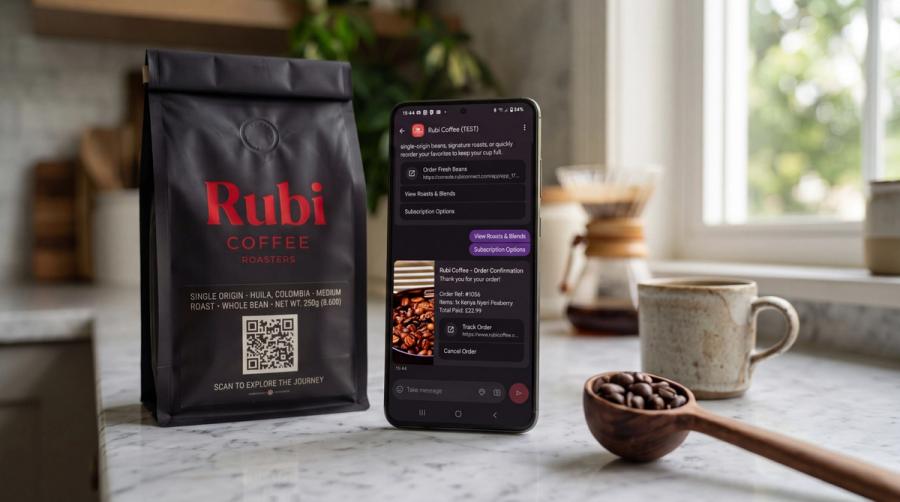
Conversational Commerce Without the Friction: The Rubi Coffee Playbook
How specialty roaster Rubi Coffee connected Shopify to WhatsApp and RCS with RubiApps to create a seamless, 24-second in-chat buying experience.

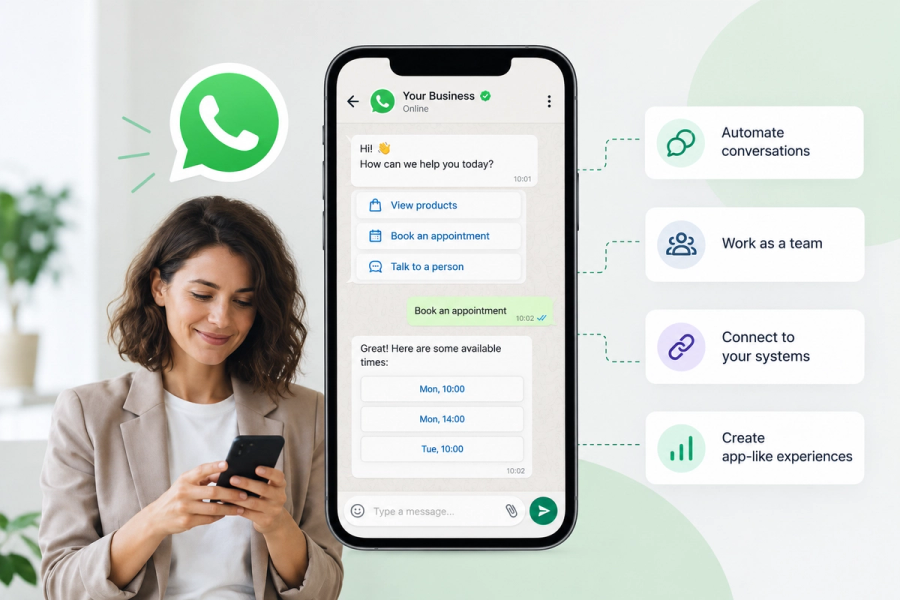
How to Get Started with WhatsApp Business in the UK: A Guide for SMEs
WhatsApp Business is easy to start with. But when your business wants to automate conversations, connect WhatsApp to its systems or create app-like customer experiences, the WhatsApp Business API opens up a whole new set of possibilities. This guide explains how to get started and what to look for in a WhatsApp Business provider in the UK.

The October 1st Reckoning: Comparative analysis of Meta and RCS Business Messaging costs.
A comprehensive cost analysis of Meta new pricing model against the flat 24h conversational rate of RCS, across Spain, the UK, and Germany for Small (1,000), Medium (4,000), and Large (50,000) conversational volumes.